Over 500 Nursing Students a Semester: How Maria College Connects Patient Conversations to Hands-On Care
Taking a blood pressure reading is one skill. Explaining it to a worried patient is another. Maria College uses Ovation to help nursing students practice the conversations that accompany clinical care.

Taking a patient's blood pressure involves more than getting an accurate reading. Nursing students also need to explain the results and respond to the patient's concerns. Both the physical procedure and the conversation need practice.
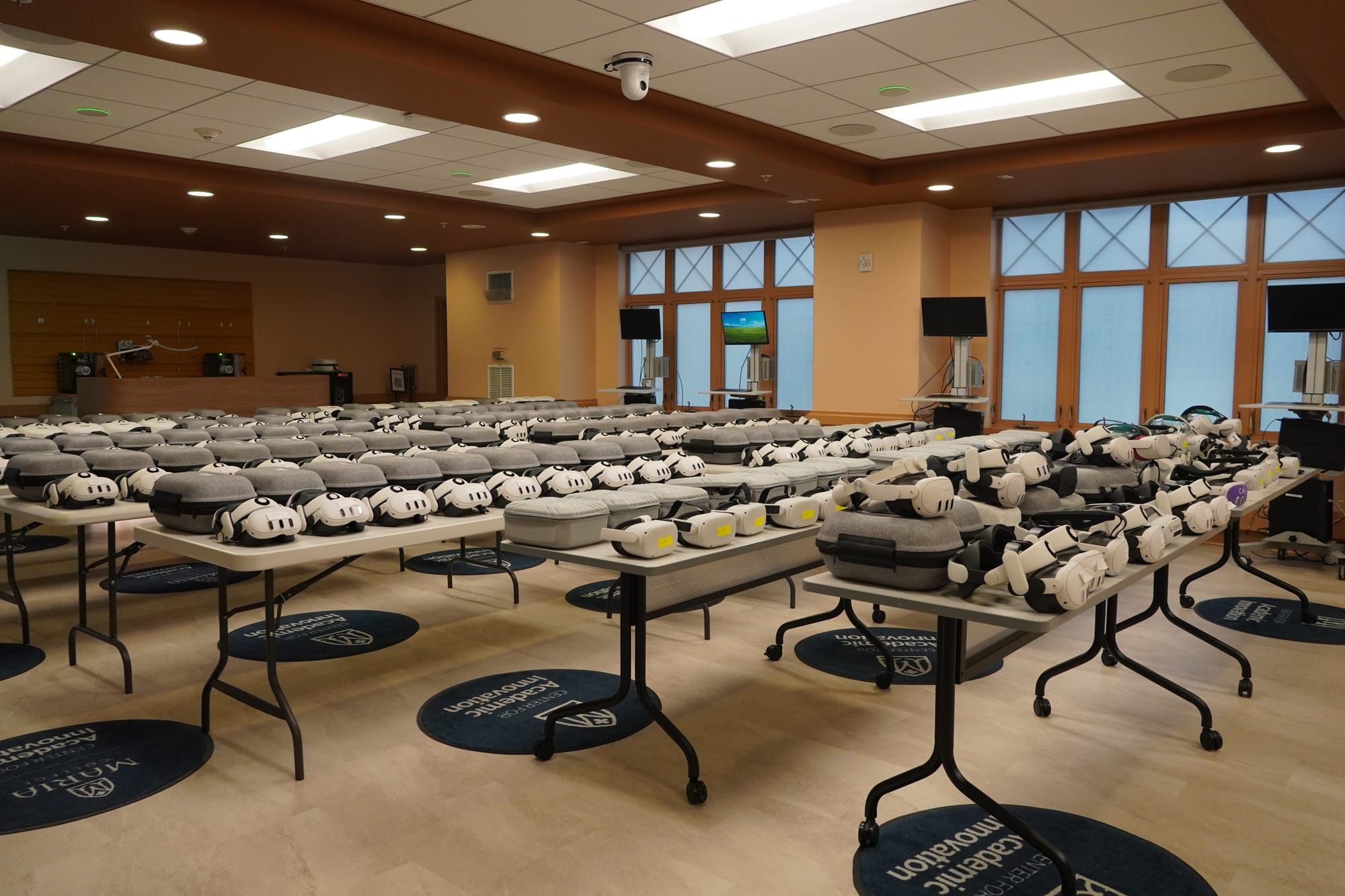
At Maria College in Albany, New York, faculty use Ovation to make patient conversations part of that preparation alongside hands-on clinical skills instruction. Students practice with AI patients in faculty-led VR labs, working through role-play scenarios that can become uncomfortable or unpredictable.
Jason Coley, PhD, Director of the Center for Academic Innovation at Maria College, leads the team that provides equipment and technical support for the VR labs. Deb Pezzolla, MS, RN, CNEcl, CHSE, Assistant Professor and Virtual Reality Education Specialist at Maria College, is one of the faculty members helping students practice the conversations that go with the clinical skills they’re learning.
For fall 2026, Maria has scheduled 144 nursing VR lab sessions across five courses, representing 1,668 scheduled student visits.
Learning from a difficult patient conversation
Ovation is part of JumpStart, Maria's nursing preparation program, where students practice patient intake conversations. Coley described one scenario with a deliberately abrasive AI patient who repeatedly interrupted students' explanations. Some students became frustrated. The faculty used those reactions as teaching moments, discussing how to stay calm and respond professionally when a patient conversation becomes difficult.
In one practice session, a student told the AI patient to be quiet. Ovation’s feedback flagged the response as inappropriate. That feedback gives students something specific to reconsider before trying again. Coley also observes that students often seem more relaxed practicing in Ovation than in simulations in front of their peers.
“It's not just what the students say, but it's how they say it,” Coley says.
Faculty can use Ovation’s Personas and Scenario Modifiers to shape precisely who the AI patient is and how they respond. An instructor might set up a patient who interrupts when worried or asks for clarification when an explanation is hard to follow.
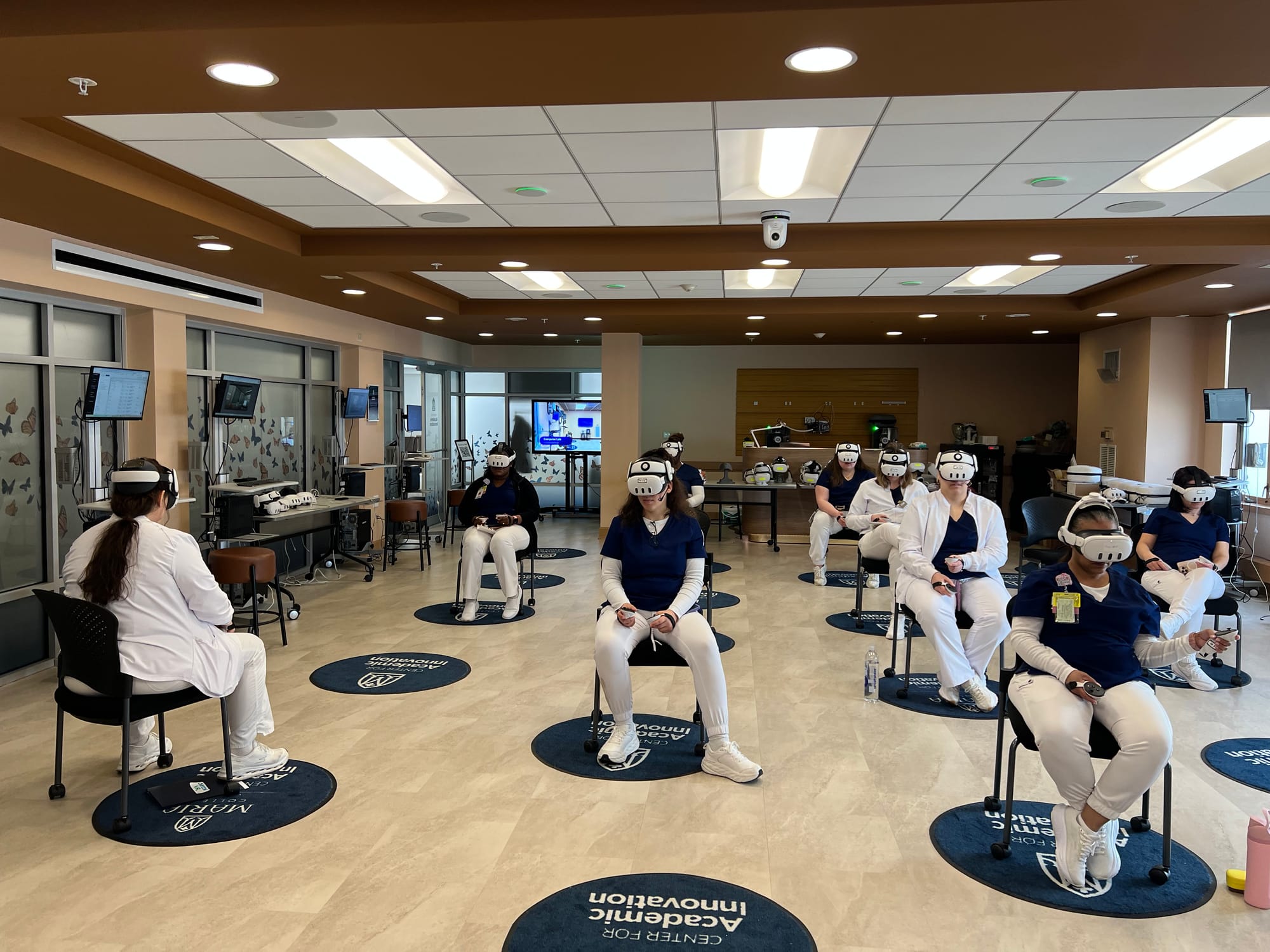
Nursing students in Maria College’s VR lab. Photo courtesy of Maria College.
Using feedback in the next conversation
Faculty design each assignment around a learning objective. Students use Ovation’s written feedback to refine how they respond in their next practice session.
Faculty can use Factors to choose what Ovation evaluates. The term empathy, for example, can mean different things depending on the context. Coley describes grounding the assessment in the nursing course’s definition of empathy and the scholarly references it draws on. An instructor might look for whether a student acknowledges a patient’s concern before explaining the next step. Students can look for that change in their feedback, and faculty can listen for it when they review the next conversation.

An AI patient in Ovation’s Examination Room, paired with an example of written feedback on empathy.
If the patient raises a concern the student didn’t anticipate, the student has to decide how to apply what they’ve learned in the moment. Pezzolla says that gives students a chance to “really take the brain and start stretching it.”
When students practice in Ovation, Pezzolla says, “I think they’re less afraid to make a mistake.” During a recent competency assessment, she noticed that some students were asking questions more naturally. She wondered whether the extra conversation practice had played a part.
Making room for more practice across the nursing curriculum
At Maria, students can rotate between mannequin work and AI patient conversations in the same lab. That gives them time to practice the procedure and the conversation that goes with it, from explaining what they’re about to do to responding to a patient’s concerns.
“The VR isn’t separate. You’re in a pathway here, and everything is building off each other,” Coley says.
Students can repeat a conversation without scheduling another session with a role-play partner. Faculty can duplicate and share Ovation assignments across courses and then adjust the patient, situation, or feedback criteria to align with what students are learning. Coley says browser access also reduced installation difficulties and gave students who couldn’t come to campus another way to practice.
“This is the first semester that we really turned up the dial on it,” Pezzolla says. Maria’s Ovation account logged 2,669 recordings and 353.7 hours of recorded practice from January 1 through November 4, 2026, compared with 499 recordings and 64.4 hours in all of 2025.
Pezzolla plans to compare end-of-semester ATI mental health benchmark results for third-semester RN students who practiced mental health conversations in Ovation with results from prior cohorts.
Beyond the nursing lab
Coley imagines a nursing case where a patient declines treatment for cultural reasons. The student would need to explain the options, listen to the patient’s concerns, and respect their decision. He’s exploring how Ovation could give students practice working through ethical decisions in Foundations of Social Justice, a course required for every Maria College student.
Maria’s Clinical Mental Health Counseling and Occupational Therapy students have already used Ovation in simulated counseling labs. Coley is also exploring possible uses in Career Services and English language learner tutoring. The conversations differ by program, but faculty can start with the same question: What conversation will our students need to have, and where could they use additional practice?
In the nursing lab, that might be the moment after a student takes a blood pressure reading and the patient asks, “What do those numbers mean?” The student can explain the reading, hear the patient’s next question, and use the feedback to try again. When a patient asks that question in clinical practice, the student has already had a chance to find the right words.
Explore how Ovation supports communication practice in higher education.