
How the University of North Florida Uses Ovation to Prepare Future Healthcare Professionals
UNF’s Nutrition and Dietetics students practice realistic client conversations with AI-powered avatars to build confidence, empathy, and counseling readiness.

“Students are too nice to each other.”
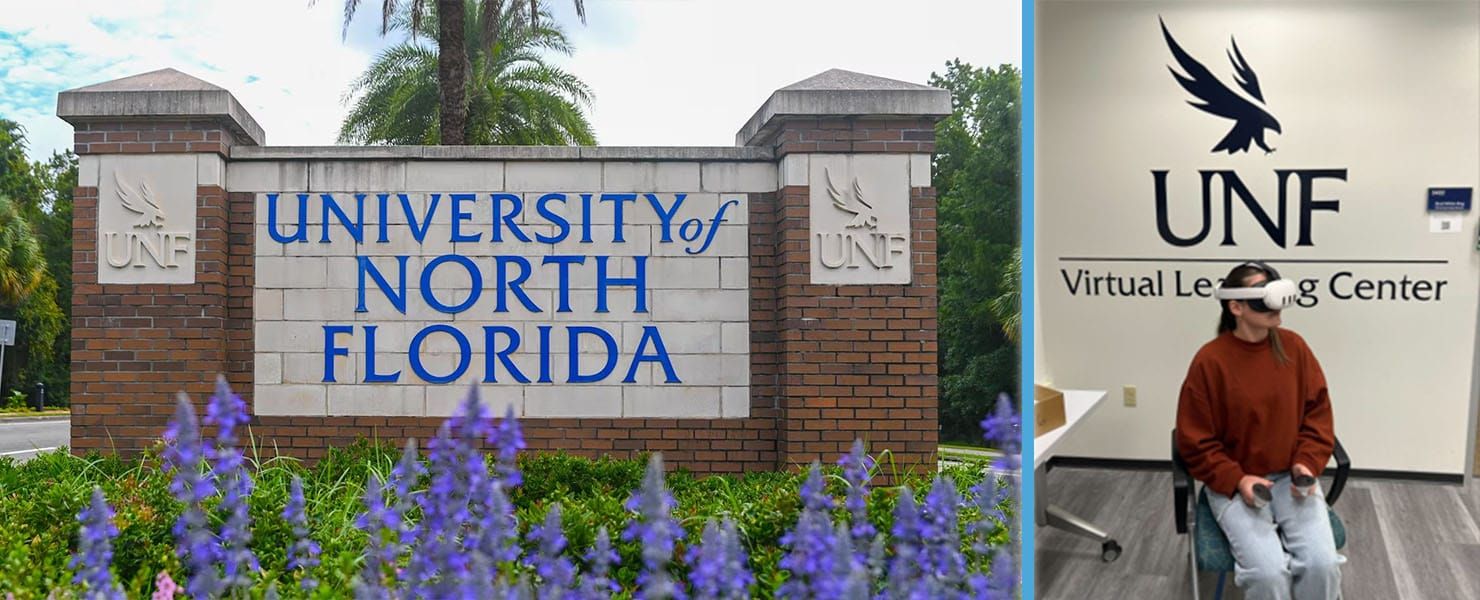
That was the problem Kristin Berg, DCN, RDN, LDN, kept seeing in nutrition counseling role-play at the University of North Florida. Her students were learning the science of nutrition, but they also needed practice navigating the human side of counseling: hesitation, resistance, confusion, and trust.
In traditional peer role-play, classmates wanted to be supportive. Even when students were asked to behave like difficult clients, the conversations were often too polite, too predictable, and too easy.
“They don’t always get the experience they really need,” Berg explains.
So Dr. Berg began looking for a better way to help future dietitians practice the kinds of client conversations they would eventually face in the field.
Scaling from Pilot to Department-Wide Adoption
Dr. Berg first saw Ovation at the Online Learning Consortium conference in Orlando. Her department chair was encouraging faculty to explore virtual reality and AI, and Dr. Berg immediately saw a fit: lifelike, objective practice with virtual clients who could respond in real time, stay in character, and mimic the emotional complexity of patients that students would encounter in real life.
“These are young students who sometimes can’t get out of their own way when it comes to communication. Ovation gives them a chance to practice with something that’s unbiased and realistic.”
To support the rollout, Dr. Berg contacted UNF’s library, which houses the university’s Virtual Learning Center, to confirm students could access headsets. On-campus students could use Ovation in VR, while online students could complete assignments from their computers.
The department initially applied for a university grant. When that proposal was not selected, the library stepped in to fund Ovation, and Dr. Berg’s program helped support the rollout.
What started as a small pilot is growing into a broader departmental model. This fall, UNF expects three Nutrition and Dietetics courses to use Ovation, reaching nearly 70 students.
Making Client Conversations More Realistic
Dr. Berg first used Ovation with senior undergraduate counseling students, building an assignment that asked students to “get to know” a client. She designed the virtual client to be more difficult than a classmate might be.
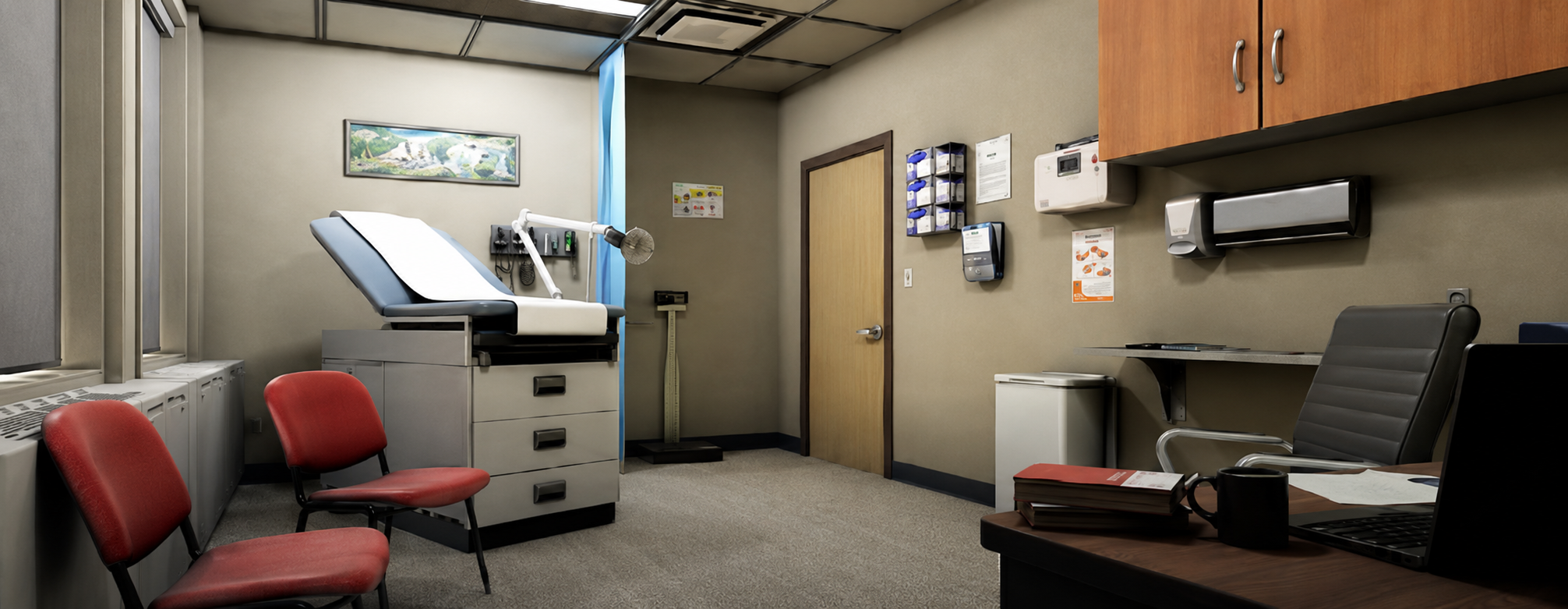
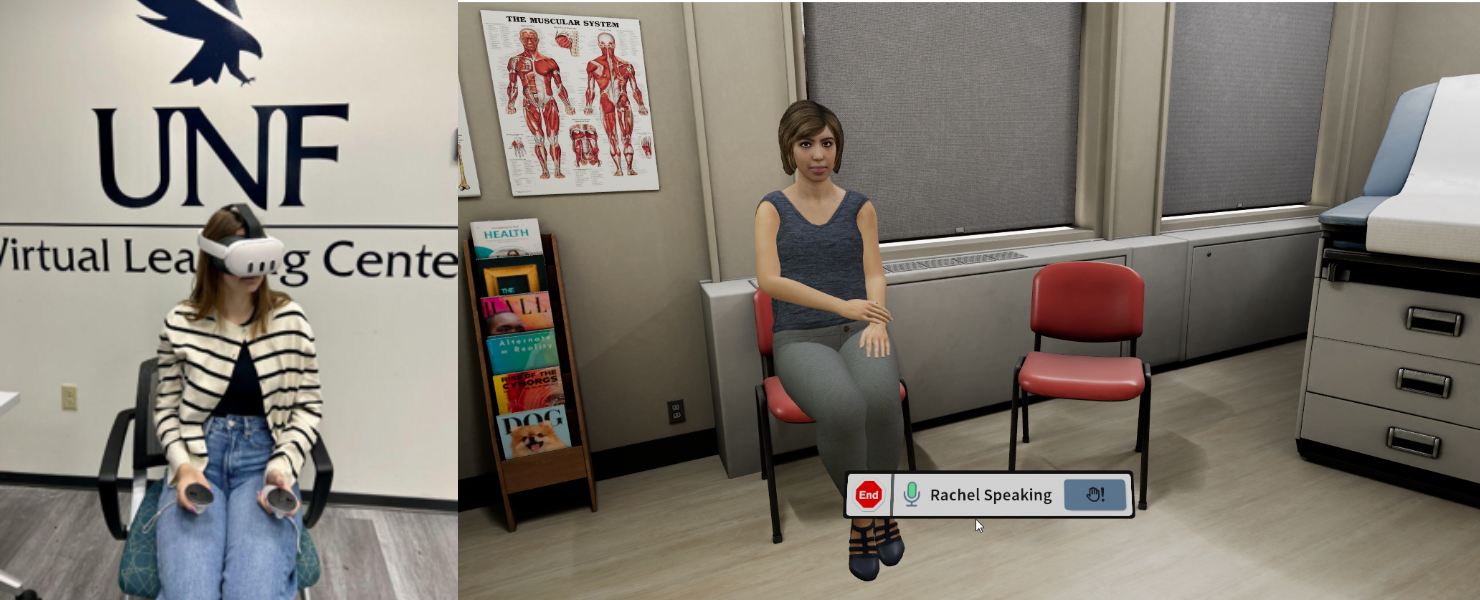
At first, AI-powered client conversations and virtual reality were new for the students. Some were excited. Some were nervous. Then they tried it.
“They immediately got into the first assignment and said, ‘That was awesome.’”
As the semester continued, students practiced different counseling interactions, received feedback, and improved over time.
“Ovation completely changed my learning experience in Nutrition Counseling. Through this software, I was able to practice counseling sessions with a client for the first time in an environment that offered great feedback and felt less intimidating. Over time, I really did see improvement in my counseling skills. Because of Ovation, I will feel more confident working with clients in real life in the future.” - Hailey Pond, Nutrition and Dietetic Student at UNF
Measuring the Skills that Matter
For Dr. Berg, realistic practice was only part of the goal. She also wanted feedback tied to the counseling skills students needed to develop.
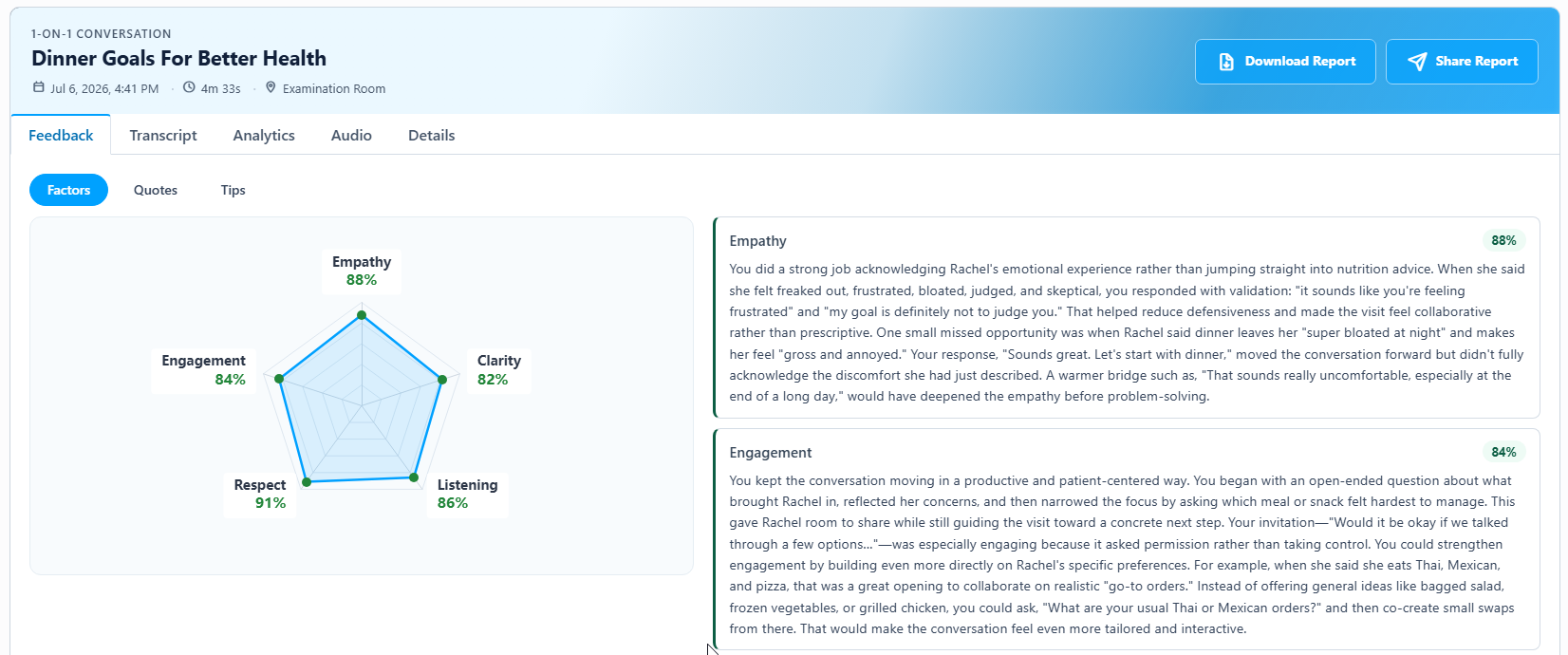
Using Ovation, she created custom Factors for each counseling assignment, including reflective listening, empathy, and thoughtful responses that did not merely repeat a client’s words.
“I needed to know that AI could pick up counseling skills,” she says. “The counselors are supposed to reflect but not parrot everything back.”
Because healthcare conversations can easily become too broad, Berg also uses Scenario Modifiers to keep each interaction tailored to a specific scope of nutrition counseling. Instead of letting a conversation drift into general medical advice, she customizes the scenario so students practice the counseling behaviors, responses, and decisions they will need as future dietitians.
Easy to Build, Supported at Every Step
For Dr. Berg, a new technology could not be a burden. Ovation had to fit into her courses, support multiple learning environments, and remain easy to use at scale.
Training and support from Ovation helped her answer questions, test ideas, and translate learning goals into realistic simulations. “The Ovation team makes it very user-friendly,” Berg says, speaking of the customer service she receives. She also saw the product continue to improve as new features and updates were added.
For Dr. Berg, using Ovation was not just manageable. It was enjoyable.
“I absolutely loved setting up assignments. It was fun for me,” she says.
To move faster, she used generative AI tools to draft assignments, client profiles, and scenario details. “I used ChatGPT and Copilot to help me create assignments,” she says. “I had the ideas. AI helped me build them.”
As she became more comfortable, creating new assignments became faster.
“I’d come home on a Sunday at 9 PM and realize I forgot to create an Ovation assignment. I’d jump in and have it ready in 20 to 30 minutes.”
Assignments also became reusable. Once Dr. Berg built an Ovation assignment inside the organization, other instructors could duplicate and modify it.
Expanding Across Courses, Research, and Future Healthcare Training
Nutrition counseling was the starting point, and UNF is already looking toward what’s next.
Dr. Berg is incorporating Ovation into a seminar course where students prepare a 30-minute presentation. She is also exploring medical nutrition therapy case scenarios in which students must combine clinical knowledge with clear, compassionate communication.
Research is another area of growth at UNF. One colleague received a grant for a study in which student research assistants will use Ovation to help students practice their interactions. Dr. Berg also described future use cases related to weight bias and weight inclusivity, in which students need realistic, respectful practice with representative virtual clients before providing education or interventions.
For Berg, the value of judgment-free practice also became personal. For a family member with autism, public speaking has not always come naturally. As he prepared for speech assignments, interviews, and a future in criminal justice, she introduced him to Ovation as a lower-pressure way to rehearse.
The moment reinforced something she already suspected. The skills developed through Ovation extend beyond academic assignments. That personal experience reinforced what she already saw with her students: communication practice is not just about grades. Whether preparing for a presentation, an interview, a difficult conversation, or a future career, communication practice remains valuable for users with diverse backgrounds and experiences.
The goal remains clear: give students a realistic place to practice before they work with real clients. With Ovation, the University of North Florida is helping future dietitians and healthcare professionals do exactly that.
See how Ovation can help your institution expand experiential learning. New organizations can try Ovation free for 30 days. Learn more.