
How UT San Antonio Uses Ovation to Scale Career-Ready Communication Practice
In its first year, 254 students practiced interviews, workplace investigations, conflict resolution, and leadership conversations through AI-powered simulation.

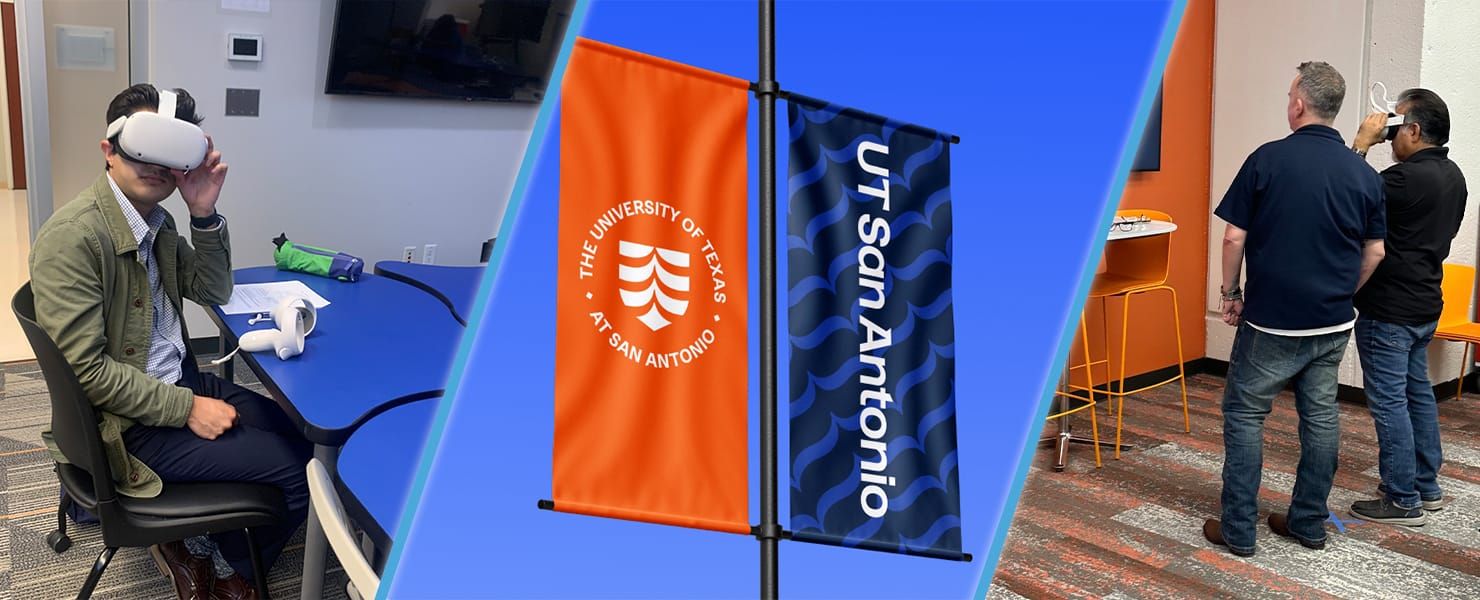
Before students lead a difficult workplace conversation, interview for their first professional role, or respond to a conflict on the job, they need a place to practice.
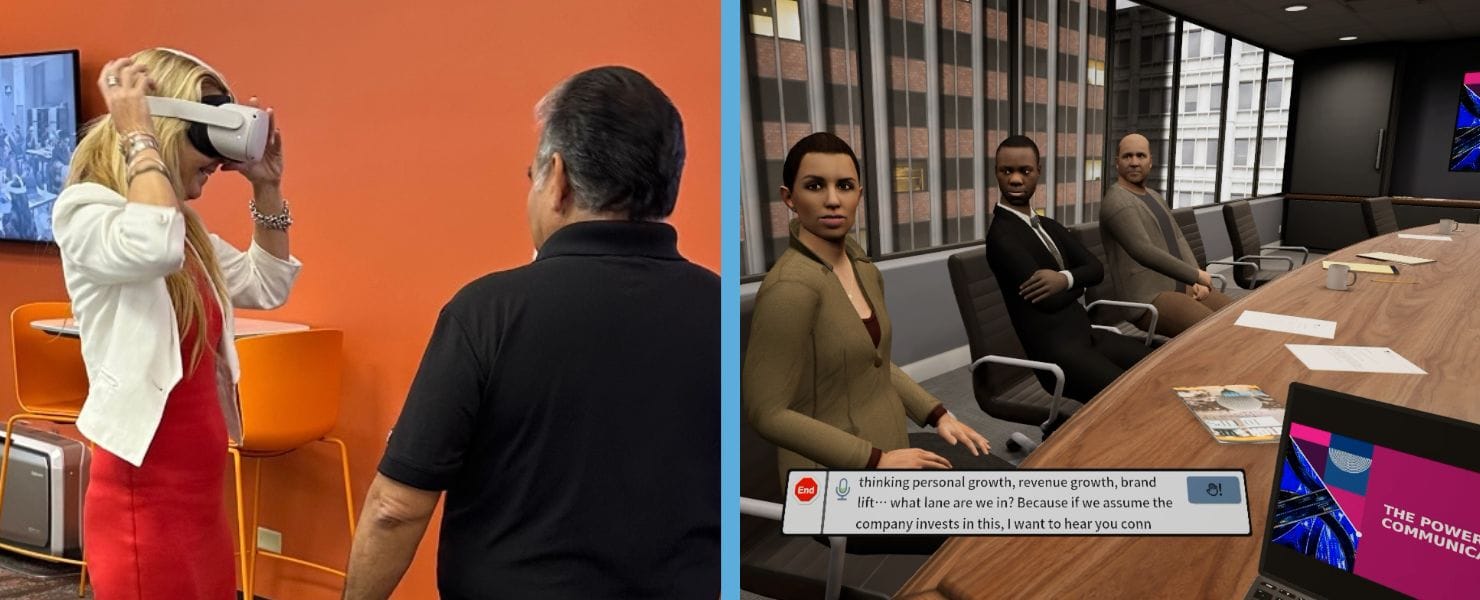
At the University of Texas at San Antonio, hundreds of students are getting that practice through Ovation: an AI-powered simulation platform that lets them rehearse high-stakes communication scenarios in VR and on desktop before the stakes are real.
In its first year using Ovation, 254 students practiced interviews, leadership conversations, workplace investigations, and other professional scenarios. With more than 400 students projected to participate in 2026, UT San Antonio is expanding access to structured communication practice that would be difficult to deliver consistently through traditional classroom role-play.
For students, that means more chances to build confidence, adapt in real time, and develop professional communication skills in an environment where they can practice, reflect, and improve.
Bringing Experiential Learning Into Large Courses
Jeffrey Kropp, Assistant Professor of Practice at UT San Antonio, adopted Ovation to bring experiential learning into large business courses without the burden of building simulations from scratch. Experiences that once took over a year to develop can now be created in Ovation almost immediately, allowing him to focus on designing meaningful learning activities rather than managing technical complexity.
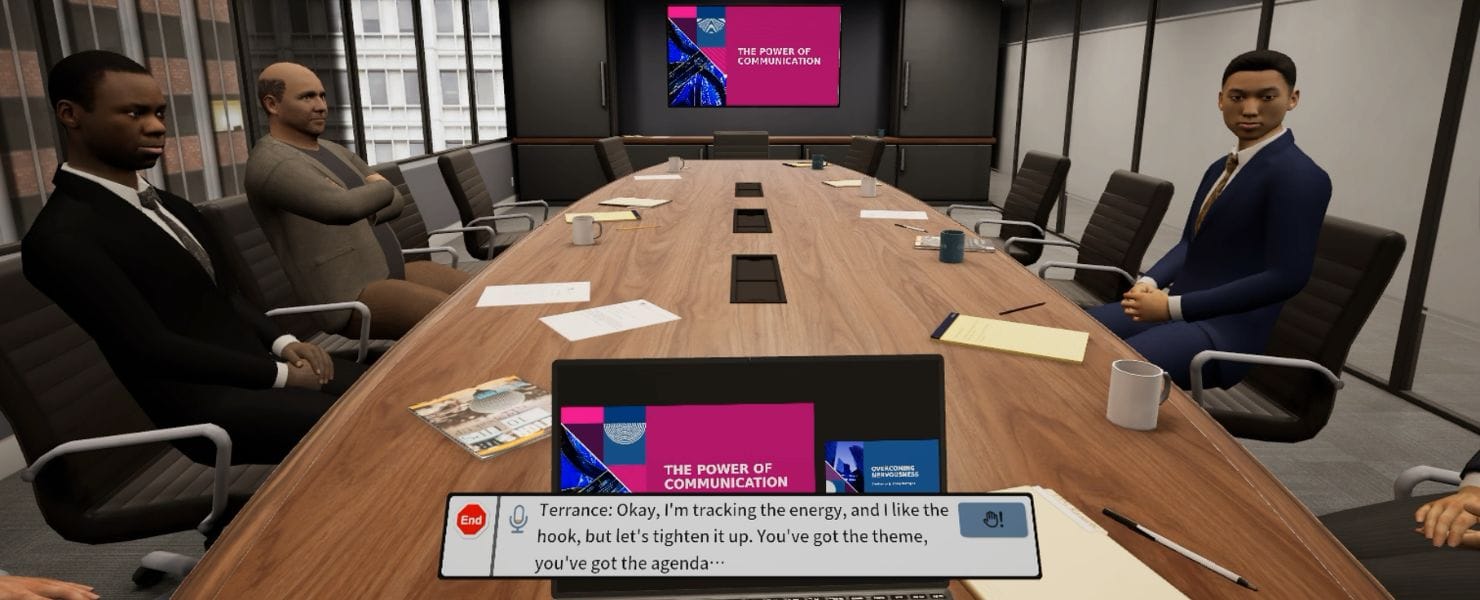
Kropp uses Ovation to scale activities such as mock interviews and workplace simulations. “It would be impossible for me to coordinate interviews for sections that have 125 students,” he notes.
Even with large enrollments, Kropp reviews Ovation's transcripts and performance data, adding, “I’ve kind of geeked out about digging into them… it’s like research. You really see what students are capable of.”
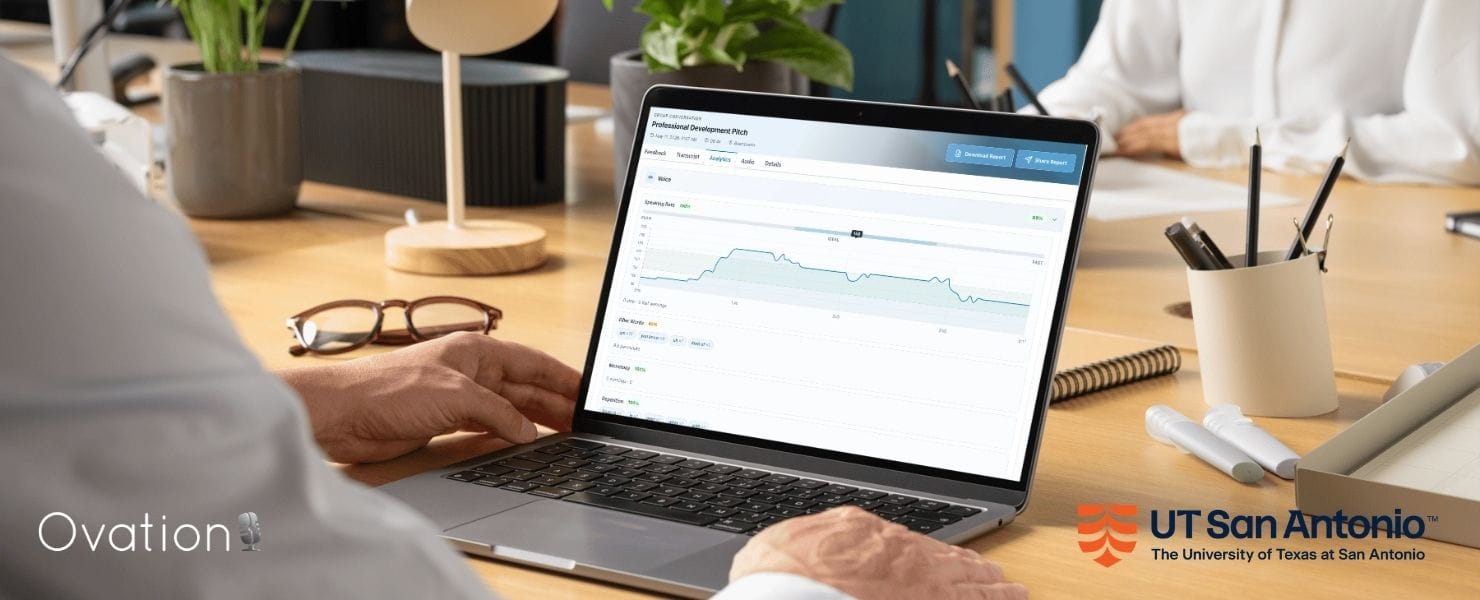
One of the most impactful applications of Ovation in Kropp’s courses is in HR-focused workplace simulations. “Students had some ‘holy cow’ moments… dealing with employee conflicts and conducting workplace investigations like drug use and sexual harassment,” he says. Students have to navigate challenging situations, ask thoughtful questions, identify what happened, and determine appropriate next steps.
Ovation’s customizable Personas make these experiences more dynamic, requiring students to manage different personalities while thinking critically under pressure and adapting in real time.
Kropp views Ovation as a way to remove barriers and focus on what matters most: giving students structured opportunities to develop and demonstrate key communication skills.
Making Practice Accessible Through the VR Lab
At a university as large as UT San Antonio, bringing immersive learning into large courses requires more than strong assignment design. It also requires flexible access, scheduling support, and spaces where students can comfortably practice speaking out loud.
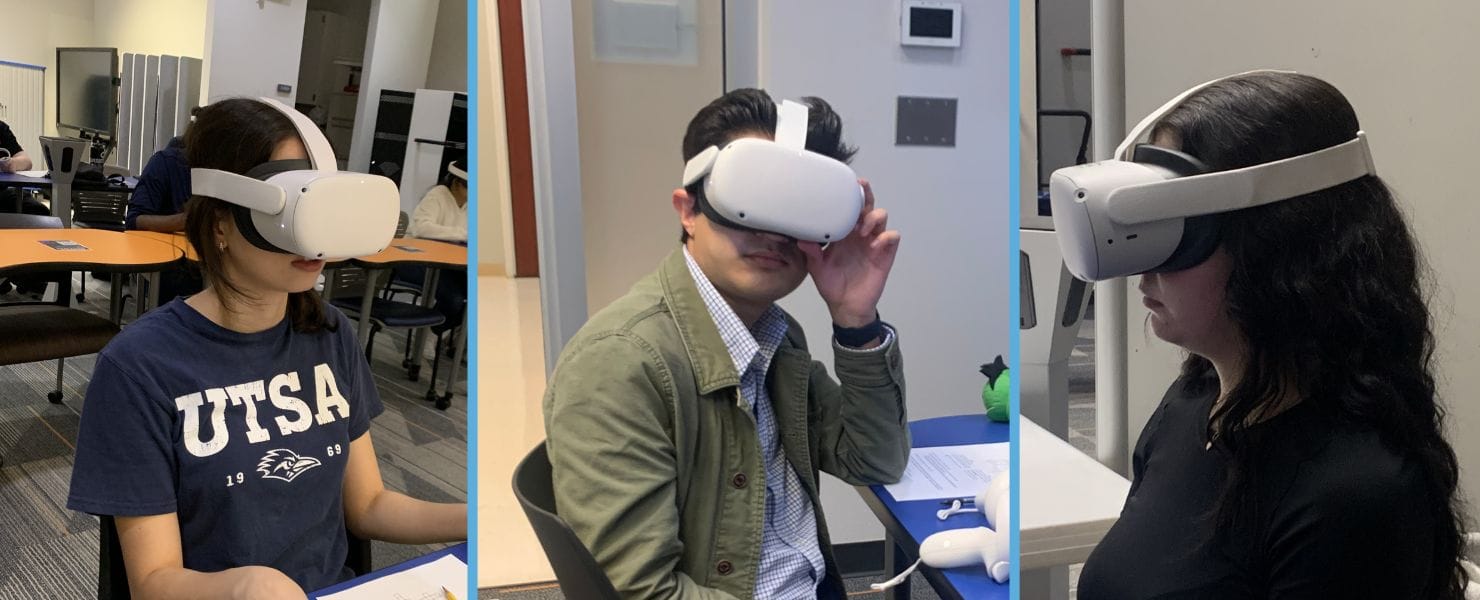
That support comes through UT San Antonio’s VR initiative, operated by Robert Granado Jr., Assistant Director of Academic Technologies, and Elyse Ramirez, Lead Learning Experience Designer. Together, they manage the lab and VR headsets where many students access Ovation, while others participate from their own computers and laptops.
The lab operates through scheduled sessions and shares space with other departments. It also solves a practical challenge for students: finding a private place to practice professional communication without the pressure of a live audience. For many, it is their first opportunity to speak through workplace scenarios in a realistic environment where they can make mistakes, reflect, and try again.
“We’ve had students finish their work and then ask if they can try other scenarios,” Ramirez said. “They’ll explore interviews, podcasts, even just open-ended conversations.”
Turning Difficult Conversations Into Structured Practice
In many courses, difficult conversations are taught through peer role-play. Those exercises can be valuable, but they are hard to scale, difficult to keep consistent, and often uncomfortable for students who are still building confidence.
Ovation gives instructors a way to turn those moments into structured practice. AI-driven avatars can push back, become defensive, ask follow-up questions, or move the conversation in unexpected directions. Students have to listen, respond, stay composed, and guide the discussion toward a productive outcome.
“As future leaders, they have to learn adaptability,” Ramirez explained. “The AI might get emotional or try to derail the conversation, and the student has to stay calm, show empathy, and guide the discussion.”
Instructors can customize the situation, the avatar’s behavior, and the skills students are expected to demonstrate. Students can then repeat scenarios, review feedback, and improve over time.
Confidence You Can Hear Developing
“With Ovation, students can practice at their own pace,” Ramirez said. “They get real-time AI feedback, and they can make mistakes without feeling judged.”
For the UT San Antonio team, one of the most striking outcomes has been hearing that growth over time.
“We hear their conversations from the beginning of the semester to the end,” Ramirez said. “It’s amazing how much they evolve.”
That growth is backed by student feedback. Across business courses, students consistently report feeling more confident after using Ovation multiple times throughout the semester.
A Foundation for the Future
For UT San Antonio, Ovation is part of a broader strategy to prepare students for life after graduation.
Looking ahead, Kropp sees Ovation as a tool not just for assignments, but for continuous skill development. He is exploring ways to introduce mentor-style personas and career coaching experiences that help students build confidence before entering high-stakes situations.
“Some just don’t have a clue yet about what job they really want… and they’re nervous,” he observes, particularly when it comes to career direction and professional communication. By creating more guided, repeatable experiences, he aims to shift from one-time assessments to ongoing development and self-reflection. “This could help them figure out what they’re pursuing… instead of throwing them into the deep end,” he says.
UT San Antonio’s rollout shows what becomes possible when realistic communication practice is no longer limited by room schedules, instructor availability, or the logistics of live role-play.
For institutions looking to expand experiential learning, Ovation helps make meaningful practice available to more students, across more scenarios, with less operational complexity.
See how Ovation can help your institution expand experiential learning. New organizations can try Ovation free for 30 days. Learn more.